

The IRS’s Offer in Compromise program under IRC § 7122 can help you reduce the debt you owe and get your financial life back on track. The program benefits both you and the IRS. It lets you negotiate a tax settlement for less than you owe and allows the IRS to collect a portion of the debt. However, it isn’t a shortcut for taxpayers who want to pay less. The IRS rejects most applications for many reasons.
An offer in compromise isn’t the solution for every tax debt issue, and it comes with several disadvantages. This post looks at the advantages and disadvantages of an offer in compromise and walks you through how the IRS calculates an acceptable offer. It also covers alternatives worth considering. If you’re weighing an offer in compromise against other tax resolution options, consult our OIC specialists before you move forward.
Key Takeaways
- An offer in compromise settles tax debt for less than the full balance under IRC § 7122. The three grounds are doubt as to collectability, doubt as to liability, and effective tax administration.
- The IRS calculates an acceptable offer using reasonable collection potential (RCP): net asset equity plus a multiple of future income.
- Submitting an offer blocks new levies while it’s pending. Once paid in full, an accepted offer releases any related federal tax lien and closes out the debt for good. A levy already in place before submission isn’t released automatically.
- Not everyone qualifies. Taxpayers with significant equity or income usually exceed the RCP threshold and won’t get an acceptable offer approved.
- Accepting an OIC can mean forfeiting certain carryforward tax benefits. It also puts a summary of the settlement on public record.
- Taxpayers must remain in compliance with filing and payment obligations for five years after acceptance, or the IRS can reinstate the original debt.
How an Offer in Compromise Works
The IRS bases most offers on doubt as to collectability. Under this standard, they accept less than the full balance because they don’t believe they can collect more before the collection statute of limitations expires.
Two other possibilities exist. Doubt as to liability applies when a taxpayer disputes the debt’s accuracy. These offers use Form 656-L. No application fee or financial disclosure is required. Effective tax administration applies when the taxpayer can pay in full, but doing so would create economic hardship or would be unfair given the circumstances.
For a collectability-based offer, the IRS calculates a taxpayer’s reasonable collection potential (RCP). RCP is the amount the IRS believes it can collect from the taxpayer’s income and assets. It combines net equity in assets with future income. The RCP formula uses a 12-month income multiplier for lump-sum offers. For offers paid over 6 to 24 months (periodic payment offers), it uses a 24-month multiplier. An acceptable offer must generally meet or exceed the RCP figure.
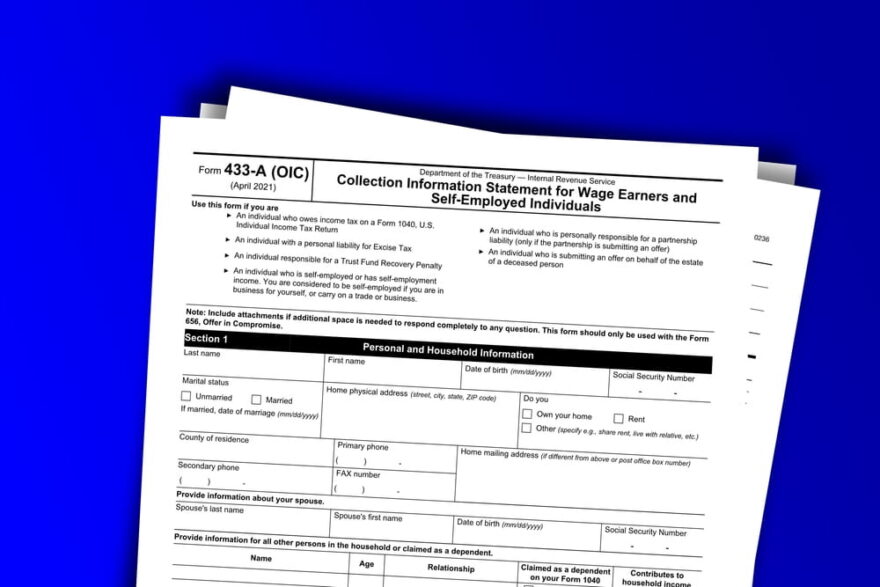
Filing requires Form 656. Individuals also file Form 433-A (OIC); businesses file Form 433-B (OIC). Most applications require a $205 fee and an initial payment. Lump-sum offers require a 20% down payment. Periodic offers require the first installment instead. Taxpayers who qualify for the low-income certification skip both the fee and the initial payment. They must file all required tax returns before the IRS will consider the offer. They must also stay current on estimated payments and, if applicable, payroll tax deposits.
Pro #1: You Can Substantially Reduce the Amount of Debt You Owe
The most obvious benefit of an offer in compromise is the opportunity to reduce the amount of debt you owe the IRS. Your goal is to negotiate your outstanding taxes down to an amount you can pay in a lump sum or in monthly payments. The IRS calculates the offer around what it can actually collect, not the underlying balance. As a result, taxpayers with limited equity and modest future earnings often see the steepest reductions. The program benefits both parties. The taxpayer resolves the liability, and the IRS recovers a portion of a debt it might never collect through enforced collection.
Pro #2: The IRS Will End Collection Activities
Once the IRS accepts an offer for processing, IRC § 6331(k)(1) bars the IRS from issuing a new levy while the offer is pending and for thirty days after a rejection. If you appeal a rejected offer, the IRS is prohibited from issuing a levy while the appeal is pending.
A levy already in place before you submit the offer is different. The IRS isn’t required to release it, though taxpayers can request release, and the IRS grants that on a case-by-case basis.
Pro #3: A Federal Tax Lien Gets Released
A Notice of Federal Tax Lien can follow a taxpayer for years, showing up in title searches and complicating refinancing or selling property. Once a taxpayer pays an accepted offer in full, the IRS releases any federal tax lien tied to the compromised debt. The release typically posts within 30 days of full payment. A released lien is not the same as a withdrawn one. A release confirms the debt is no longer owed, while a withdrawal removes the public filing itself. Taxpayers who need the filing removed entirely, not just marked released, can request a lien withdrawal separately once they satisfy the offer terms.
Pro #4: You Avoid Bankruptcy
An OIC settles federal tax debt through an administrative process, not a court filing. That distinction matters. Bankruptcy carries credit damage, a public court record, and in a Chapter 7 bankruptcy, a trustee-forced sale of non-exempt property. An accepted offer avoids all three. Some tax debts aren’t dischargeable in bankruptcy, particularly more recent liabilities or those tied to unfiled or fraudulent returns. For taxpayers stuck with that kind of debt, an OIC is often one of the only formal settlement paths left.
Con #1: Not Everyone Qualifies for an Offer in Compromise
The IRS imposes stringent qualification criteria under IRM 5.8 for applicants submitting offers in compromise, including extensive documentation and scrutiny of your finances. As a result, not all taxpayers are good candidates. Offers in compromise are based upon your ability to pay. Therefore, higher-income taxpayers or those with significant equity in their assets generally will not qualify for an offer in compromise. In both cases, the RCP formula prices them out of an acceptable offer.
Con #2: You Forfeit Your Tax Benefits and Credits
While the IRS will allow taxpayers to reduce the amount they owe through an offer in compromise, they will often require you to forfeit your ability to deduct certain tax benefits in future years. These benefits include capital loss carryovers, net operating losses, and prior-year tax credits. If you count on these tax benefits to reduce your future tax liability, an offer in compromise may jeopardize them.
Con #3: Accepted Offers Become Public Record
It’s great news when the IRS accepts your offer in compromise, but once it does so, it will be put on public record. Under IRC § 6103(k)(1), the IRS makes accepted offers available for public inspection for one year. The file includes the taxpayer’s name, city and state, the liability amount, and the offer terms. If you prefer to keep your financial matters private (as most do), you will forfeit this privilege once the IRS accepts your offer.
Con #4: Five Years of Strict Compliance Follow Acceptance
Acceptance isn’t the end of the obligation. Taxpayers must file every required return and pay every tax due on time for five years after acceptance, or the IRS can default the agreement and reinstate the full original liability, minus payments already made. A single missed filing or failure to pay a balance due with a return within that five-year window can undo years of progress.
What Improves Your Odds of Acceptance
A well-prepared offer stands a much better chance than one filed in haste:
- File every past return first. The IRS won’t process an offer while returns are missing.
- Match every number to supporting documents. Bank statements, pay stubs, and asset appraisals should line up exactly with what Form 433-A or 433-B reports.
- Price the offer to the RCP, not to a hoped-for discount. Offers submitted below the calculated RCP get returned, and the process starts over.
A tax professional who regularly prepares OICs can run a preliminary RCP calculation before you file, which weeds out applications that were never going to succeed.
Alternatives Worth Considering
An offer in compromise isn’t the only path out of tax debt. It isn’t always the fastest or cheapest option either. Depending on the situation, one of these may fit better:
- Installment agreement: Pays the full balance over time. It requires far less financial disclosure than an OIC.
- Currently Not Collectible status: Pauses collection when a taxpayer genuinely cannot pay anything right now. It doesn’t settle the underlying balance, but it stops the pressure.
- Penalty abatement: Removes penalties for taxpayers with reasonable cause or a clean compliance history. This can shrink the balance without a full OIC application.
A tax resolution specialist can run the numbers on each option before you commit to an OIC application.
Frequently Asked Questions
What percentage of offers in compromise does the IRS accept?
Acceptance rates vary by year, but the IRS rejects most applications. Most rejections happen because taxpayers submit offers below their calculated RCP or don’t provide all required information.
What happens if the IRS rejects my offer?
The application fee isn’t refunded. Any offer payment submitted with the offer will be applied to the outstanding balance. Taxpayers can appeal a rejection through the IRS Office of Appeals within 30 days of the rejection letter.
Can I still get an offer in compromise if I’m in an active installment agreement?
Yes. Taxpayers can submit an OIC while under an existing installment agreement. The IRS evaluates the offer against the same RCP standard, regardless of the current payment arrangement.
Does an offer in compromise hurt my credit score?
No. The IRS doesn’t report OIC status to credit bureaus. A related federal tax lien, if one was already filed, is public notice, but the offer itself has no direct credit reporting consequences.
Does submitting an offer pause the IRS collection statute of limitations?
Yes. Under IRC § 6331 (i)(5), the 10-year collection statute (CSED) stops running while the offer is pending, for 30 days after a rejection, and during any appeal. The clock resumes once those events end, so submitting an offer can extend the government’s deadline to collect by however long the process takes.
Can I withdraw my offer after I submit it?
Yes. A taxpayer can withdraw an offer in writing at any time before the IRS makes a final decision, with no penalty. However, keep in mind that the IRS’s ability to levy will restart.
Learn More About Our Boca Raton Tax Settlement Services Today
Offers in compromise come with pros and cons, many of which are specific to the individual. If you would like to explore making an offer in compromise to the IRS, call the tax consultants at East Coast Tax Consulting and ask for your free Boca Raton tax settlement services consultation.
