

If you owe taxes to the Internal Revenue Service, you probably already know they will be aggressive when collecting. That said, you should be proactive and find ways to resolve your tax debt and pay the IRS.
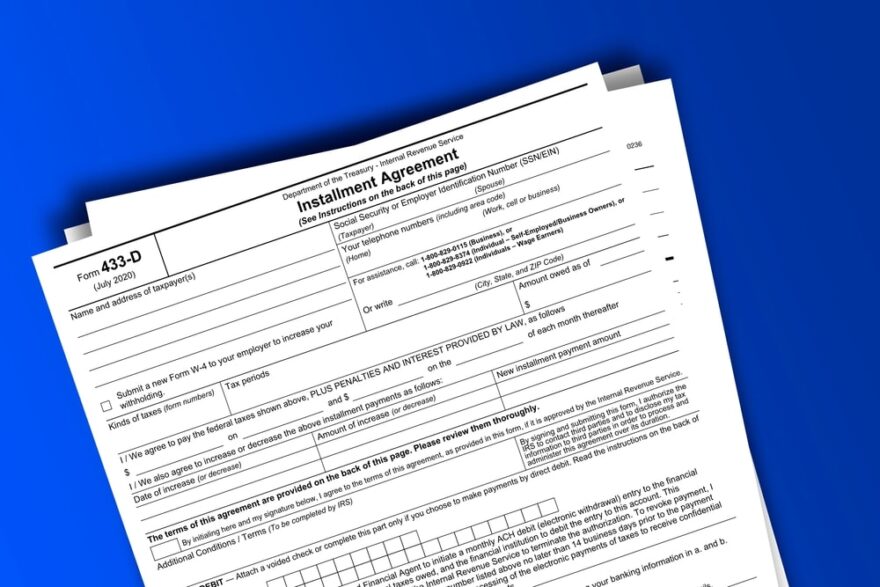
The Boca Raton tax relief services offered by East Coast Tax Consulting can help individuals explore different approaches to resolving unpaid tax issues. One common approach is an installment agreement.
Installment plans allow you to pay back taxes over time instead of in one lump sum. There are various kinds of installment agreements, and it is important to know which types you qualify for and which best fit your financial situation. When a tax relief service helps you resolve your tax problems, you’ll benefit from professional help finding the right installment agreement type.
Types of Installment Agreements
Setting up payments stops the IRS from pursuing involuntary collections against you. However, when you’re on an installment agreement, lenders will count your payments in your debt-to-income ratio if you apply for a mortgage or other loans.
The different kinds of installment agreements include:
Guaranteed Installment Agreements
If your balance due to the IRS is $10,000 or under (excluding penalties and interest), the IRS must agree to an installment agreement under certain circumstances. The IRS may reach an installment agreement with you if:
- You’ll be able to pay off the balance due on the back taxes in 36 months or less
- You haven’t filed a return late or haven’t paid your taxes late over the five years prior to trying to get an installment agreement
- You have not had an installment agreement in place during the prior five years
- You agree that in the future, you will file and pay your taxes on time
As with all installment agreements, interest and penalties continue to accrue during the term of the payment plan.
Simple Payment Plan
With a Simple Payment Plan (SPP) taxpayers have up to the remaining Collection Statute Expiration (CSED) date to pay their outstanding taxes without the need to disclose financial information if the assessed balance owed does not exceed $50,000. The CSED can be as long as ten years. However, you must be current with your tax return filings. You can benefit from this plan even if you have money or other assets available to pay your taxes but prefer to use them for different purposes.
You can apply online for an SPP and schedule automatic monthly payments, or if you prefer, make one payment at a time through IRS Direct Pay. You can also establish an SPP when dealing with an IRS employee. Setting up an SPP will prevent the IRS from filing a Notice of Federal Tax Lien, assuming one has not yet been filed.
Non-Simple Installment Agreements
Non-simple installment agreements offer greater flexibility, as the balances can be as high as $250,000. Like an SPP, non-simple installment agreements do not require you to disclose your financial information to the IRS, and you can make payments until the CSED. For example, if you have eight years left before the collection statute expires, you will make monthly payments over eight years sufficient to pay off your tax debt in full.
These agreements are straightforward, with no strings attached, provided you can meet your monthly payments.. However, you can’t set up a non-simple agreement if you are assigned to IRS field collections, meaning a revenue officer is handling your case.
The downside of the non-simple installment plan is that the IRS will file a Notice of Federal Tax Lien, a public record of your outstanding tax debt. This could be a problem if you later want to buy or sell property, in which case you must address the lien.
Regular Installment Agreement (Negotiated)
When taxpayers do not qualify for a guaranteed, simple payment plan or a non-simple installment agreement, they must request a regular installment agreement negotiated directly with the IRS.
This requires you to complete a Collection Information Statement and, in many cases, may limit your monthly payments to IRS-allowable expense guidelines. The IRS generally files a federal tax lien when you reach a negotiated installment agreement for tax debt payment.
Partial Payment Agreements
If you cannot make full payment by the collection statute expiration date but can pay some, the IRS will accept a partial payment installment agreement. You reach this type of agreement after you complete a financial form with the IRS that provides details on your assets, income, and living expenses.
Payments are based on what you can pay after accounting for essential living costs, and the term may be longer than with a streamlined or guaranteed installment agreement. The IRS will re-evaluate how much is due every two years to determine if you can pay more. Once you reach the collection statute expiration date, the IRS writes off the remaining tax debt, and you no longer owe the back taxes. The IRS may also file a federal tax lien to protect its interests.
In-Business Trust Fund Express Installment Agreements
A business that owes $25,000 or less in payroll taxes may qualify for an In-Business Trust Fund Express Installment Agreement (IBTF-Express IA). The IBTF-Express IA requires paying the payroll tax debt within 24 months or before the Collection Statute Expiration date, whichever is earlier. A direct debit installment agreement is required if the balance owed is between $10,000 and $25,000. In addition, the business must be current with its filing and payment requirements.
Getting Help From Tax Professionals
If you need to negotiate an IRS installment agreement, you need the professional tax relief services East Coast Tax Consulting offers. Call as soon as possible to get an advocate on your side who can help you choose the right type of agreement and deal with the IRS negotiation process on your behalf. Find out more today.
